Ishan Dave
I am a Senior Applied Scientist at Adobe Firefly Foundry in San Jose, California. I work on controllable image and video generation, diffusion models, and vision-language models.
I received my Ph.D. in Computer Science from the Center for Research in Computer Vision at the University of Central Florida in 2024, advised by Prof. Mubarak Shah. My research spans fine-grained video understanding, self-supervised learning, and privacy preservation.
Email: ishandave95(a)gmail.com
 Google Scholar
 GitHub
 LinkedIn
 CV (public version, for more details feel free to ask!)

Updates
Jun'26: A first author paper "CreativeVR" presented at the J2A Workshop at CVPR 2026
2026: A paper "Privacy Beyond Pixels" accepted at ICLR 2026
Jan'26: Our patent on identifying and aligning video clips was granted!
Oct'25: The Generative Upscaler project I led shipped as the default Generative Upscale capability in Photoshop 💥
Sep'25: A paper "Finegrained Video Retrieval" accepted at NeurIPS 2025
Jun'25: A paper "GT-Loc" accepted at ICCV 2025: Oral presentation! (Top 0.6% of papers)
Apr'25: A paper "ALBAR" accepted at ICLR 2025
Jan'25: Started full-time at Adobe Firefly, Seattle, WA
Aug'24: SPAct Patent Approved! my first patent as the primary inventor 💥
Jul'24: 2 first author papers accepted at ECCV 2024; Sync from the Sea selected for an oral presentation (top 3% of accepted papers)💥💥
Jun'24: Selected as Outstanding Reviewer of CVPR 2024! (top 2% among 10,000 reviewers)🥇
May'24: Started internship at Apple, Cupertino, CA
Jul'23: A First author paper "Event-TransAct" accepted at IROS 2023 💥
Jul'23: A paper "TeD-SPAD" accepted at ICCV 2023
May'23: Started summer internship at Adobe, San Jose, CA
Mar'23: A First author paper "TimeBalance" accepted to CVPR 2023 💥
Jan'23: A paper "TransVisDrone" accepted at ICRA 2023
Mar'22: A First author paper "TCLR" accepted to CVIU 2022 💥
Mar'22: A First author paper "SPAct" accepted to CVPR 2022 💥
Work Experience
 | Senior Applied Scientist Adobe Firefly Foundry
|
 | Ph.D. AI/ML Intern Apple
|
| Research Scientist Intern Adobe Research Mentors: Dr. Simon Jenni and Dr. Fabian Caba
|
| Research Scientist Intern Adobe Research Mentor: Dr. Simon Jenni
|
Publications
My research spans generative image and video models, vision-language models, and fine-grained video understanding. I study controllable generation and restoration, video retrieval and alignment, self-supervised and semi-supervised learning, and privacy-preserving representations. Earlier work includes event-camera action recognition and drone-to-drone detection.
Selected publications are listed from newest to oldest; representative papers are highlighted.

|
CreativeVR: Diffusion-Prior-Guided Approach for Structure and Motion Restoration in Generative and Real Videos
Tejas Panambur*, Ishan Rajendrakumar Dave*, Chongjian Ge, Ersin Yumer, Xue Bai Proceedings of the IEEE/CVF Conference on Computer Vision and Pattern Recognition (CVPR) Workshops, 2026 J2A Workshop *= equal contribution
Modern text-to-video (T2V) diffusion models can synthesize visually compelling clips, yet they remain brittle at fine-scale structure: even state-of-the-art generators often produce distorted faces and hands, warped backgrounds, and temporally inconsistent motion. Such severe structural artifacts also appear in very low-quality real-world videos. Classical video restoration and super-resolution (VR/VSR) methods, in contrast, are tuned for synthetic degradations such as blur and downsampling and tend to stabilize these artifacts rather than repair them, while diffusion-prior restorers are usually trained on photometric noise and offer little control over the trade-off between perceptual quality and fidelity.
|
|
Privacy Beyond Pixels: Latent Anonymization for Privacy-Preserving Video Understanding
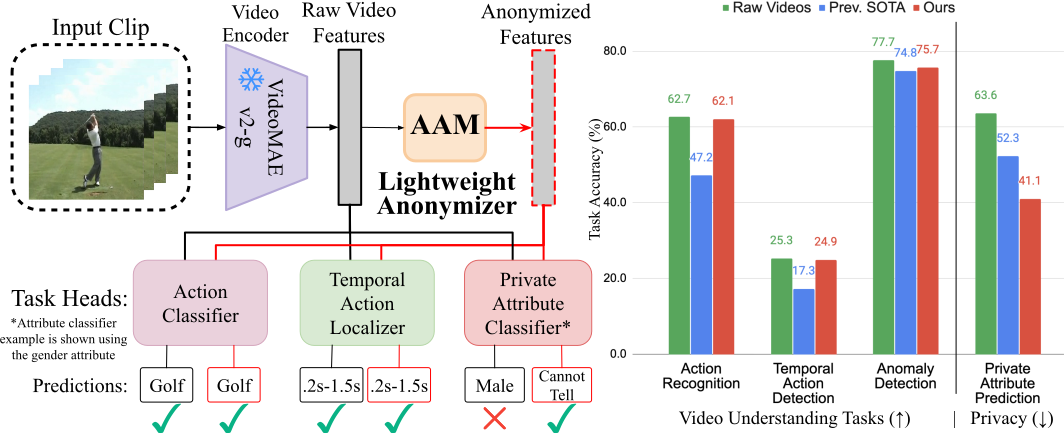
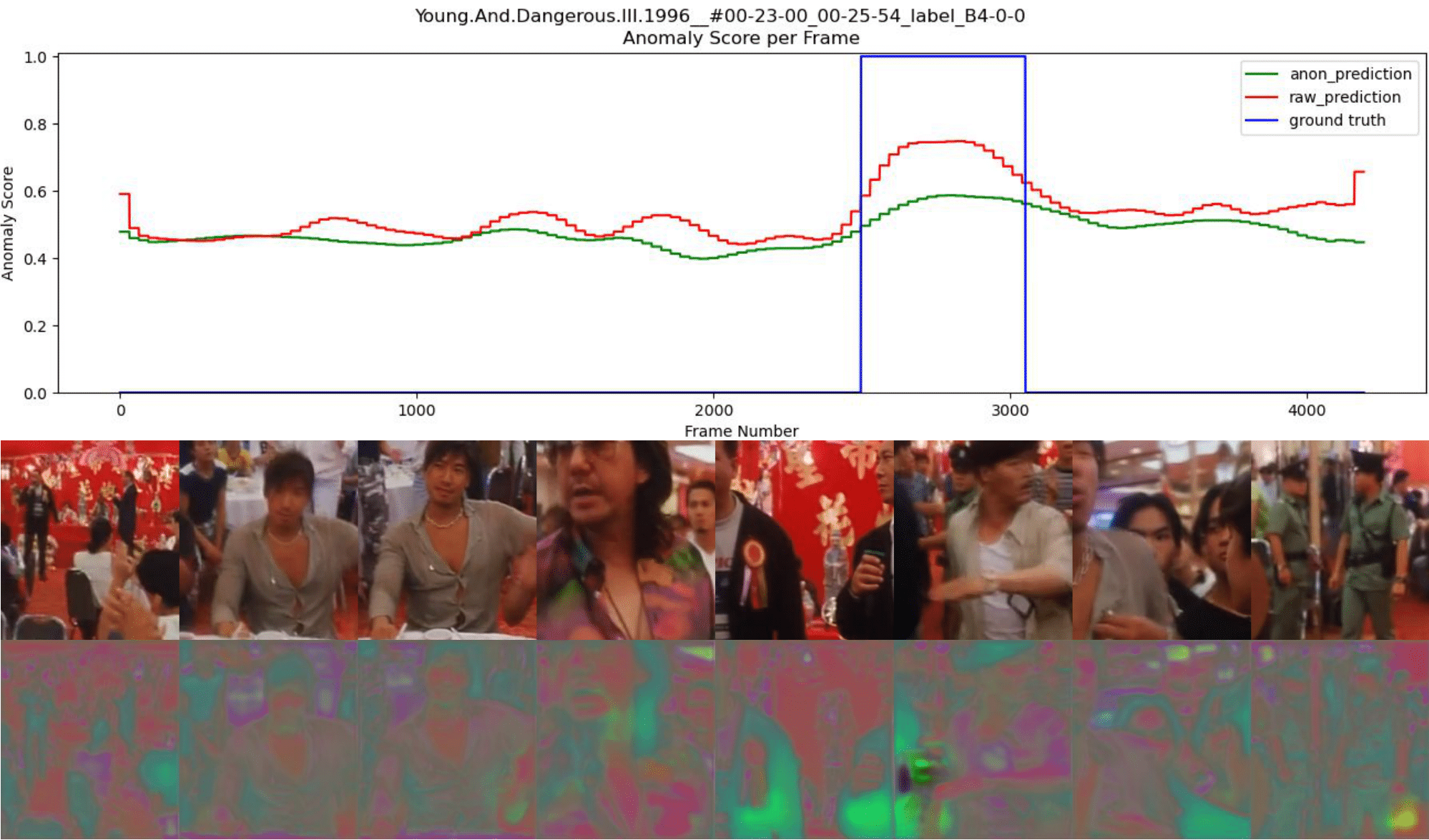
Joseph Fioresi, Ishan Rajendrakumar Dave, Mubarak Shah International Conference on Learning Representations (ICLR), 2026 We introduce a lightweight anonymizing adapter that removes private information from the latent features of frozen video foundation models while preserving their usefulness across downstream tasks. Training combines a self-supervised privacy objective, multitask co-training, and latent consistency regularization. The approach reduces privacy leakage while retaining performance on action recognition, temporal action detection, and anomaly detection, and also mitigates gender bias in action recognition. |

|
From Play to Replay: Composed Video Retrieval for Temporally Fine-Grained Videos
Animesh Gupta, Jay Parmar, Ishan Rajendrakumar Dave, Mubarak Shah Conference on Neural Information Processing Systems (NeurIPS) , 2025 We enable fine-grained video retrieval from a query video and a natural-language modification, focusing on subtle differences in action and timing. TF-CoVR provides 180K triplets from gymnastics and diving videos. Temporally discriminative video representations and contrastive alignment help retrieve clips that satisfy the requested change while preserving the relevant visual context. |
|
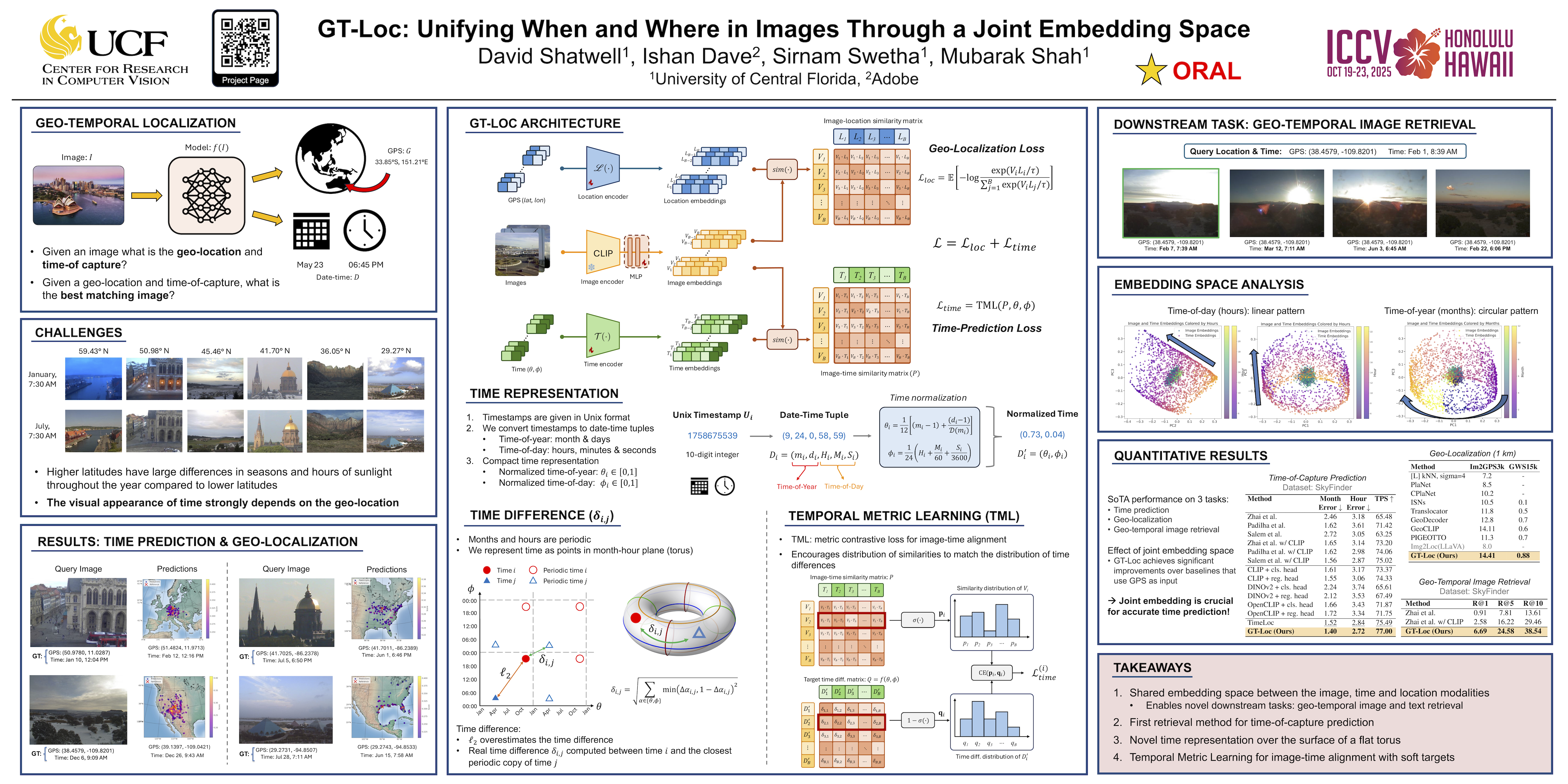
GT-Loc: Unifying When and Where in Images Through a Joint Embedding Space
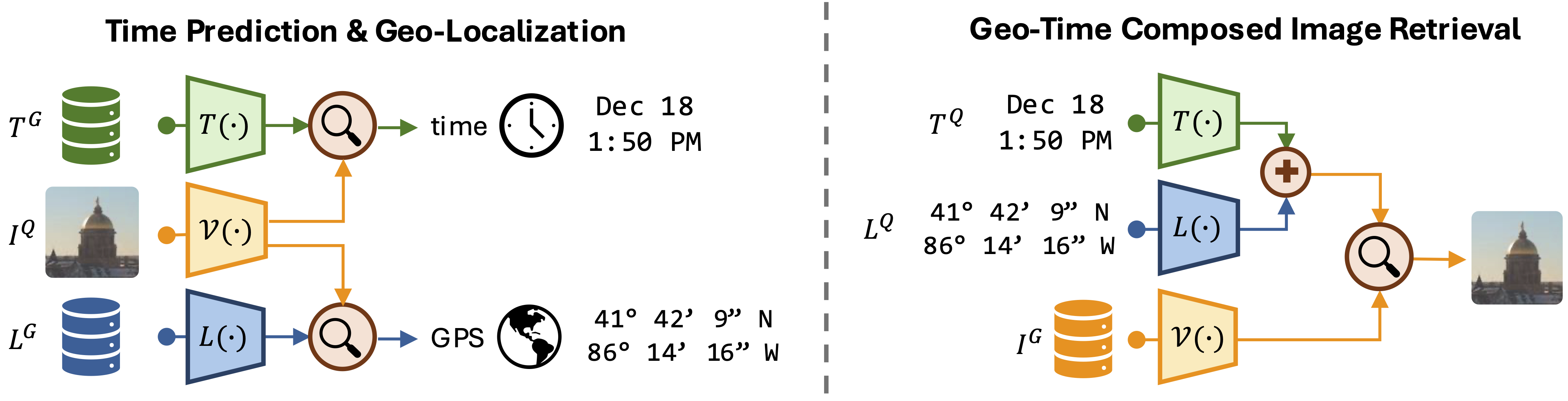
David Shatwell, Ishan Rajendrakumar Dave, Sirnam Swetha, Mubarak Shah International Conference on Computer Vision (ICCV) , 2025 Oral presentation! (Top 0.6% papers) We learn a shared embedding space across images, capture time, and geolocation to jointly infer when and where an image was taken. Cyclical temporal metric learning captures the structure of time and supports compositional and text-based image retrieval, with applications in metadata recovery and visual search. |
|
ALBAR: Adversarial Learning approach to mitigate Biases in Action Recognition
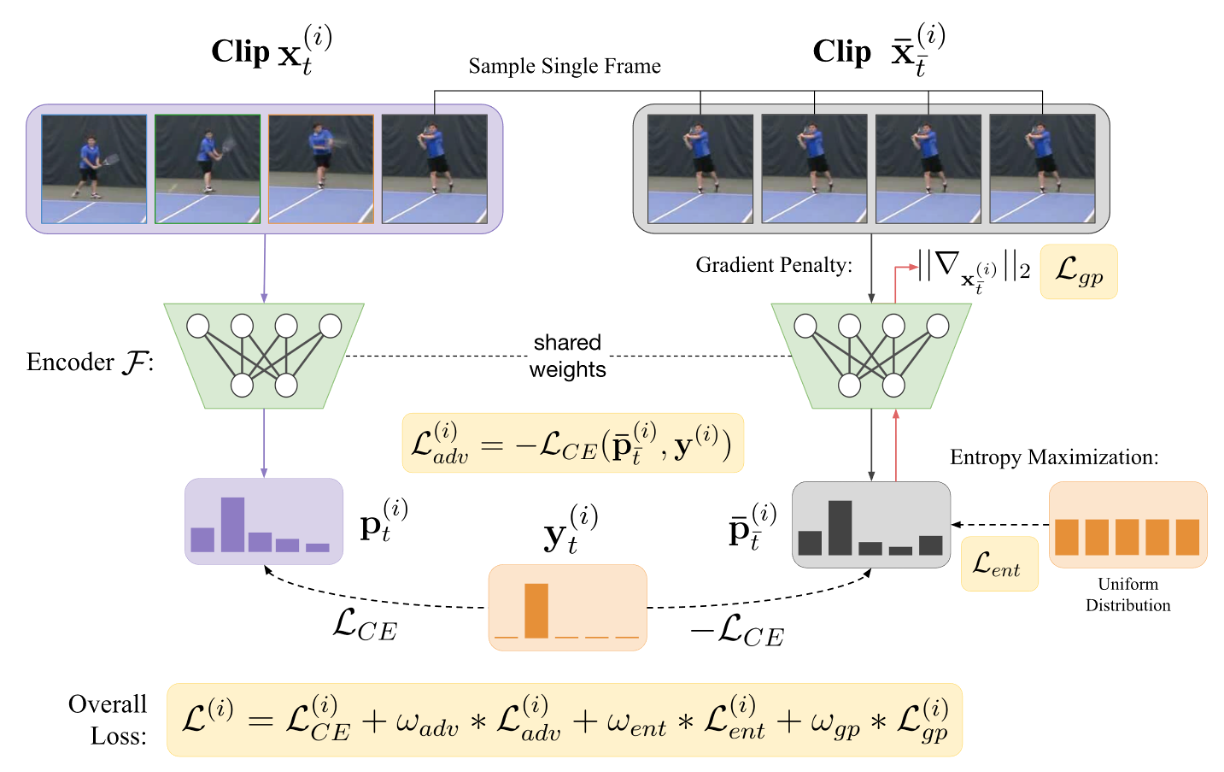
Joseph Fioresi, Ishan Rajendrakumar Dave, Mubarak Shah International Conference on Learning Representations (ICLR) , 2025 Poster Presentation We reduce foreground and background shortcut bias in video action recognition through adversarial training on static clips. Entropy maximization and gradient regularization discourage reliance on spurious appearance cues, improving robustness and the learning of action-relevant video representations. |
|
Sync from the Sea: Retrieving Alignable Videos from Large-Scale Datasets
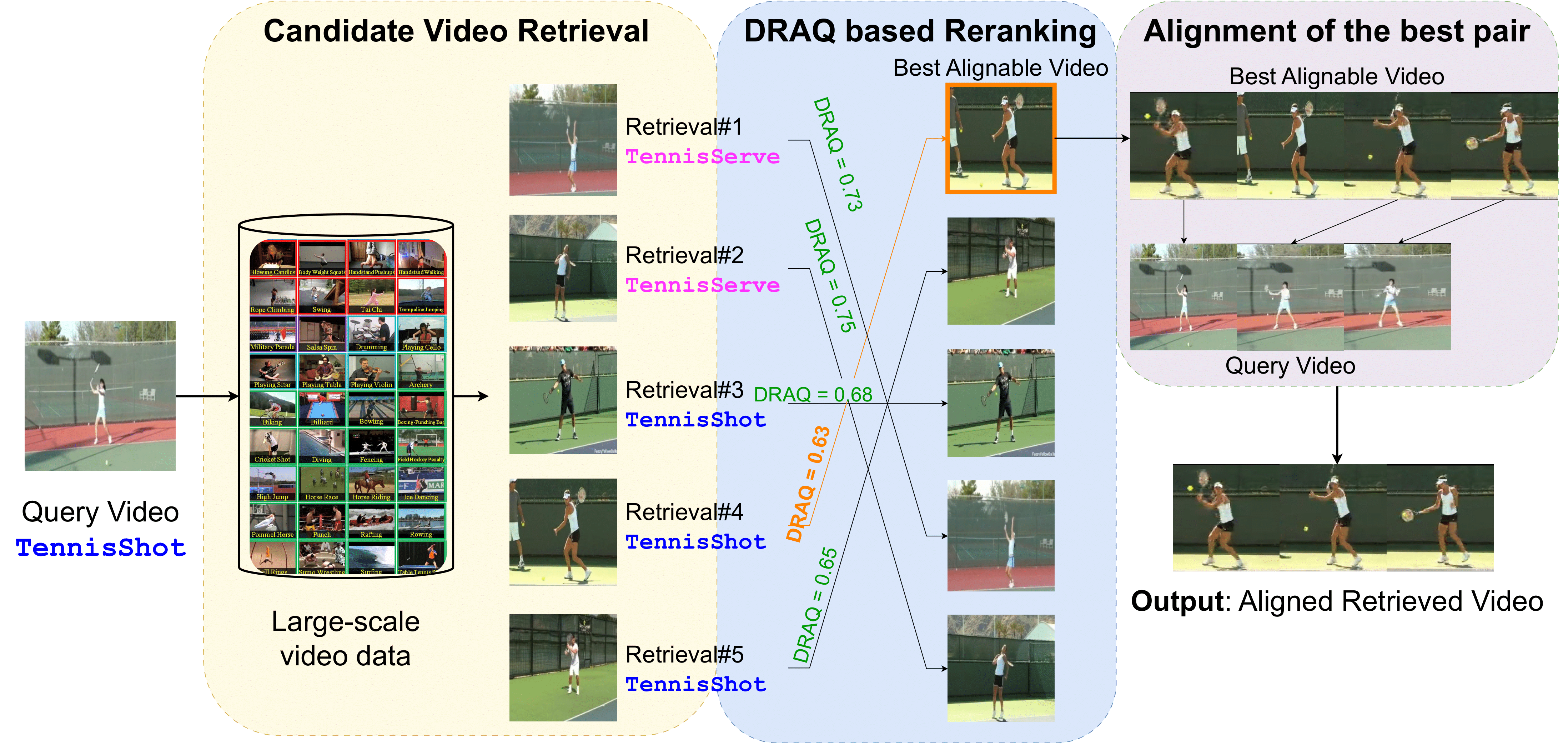
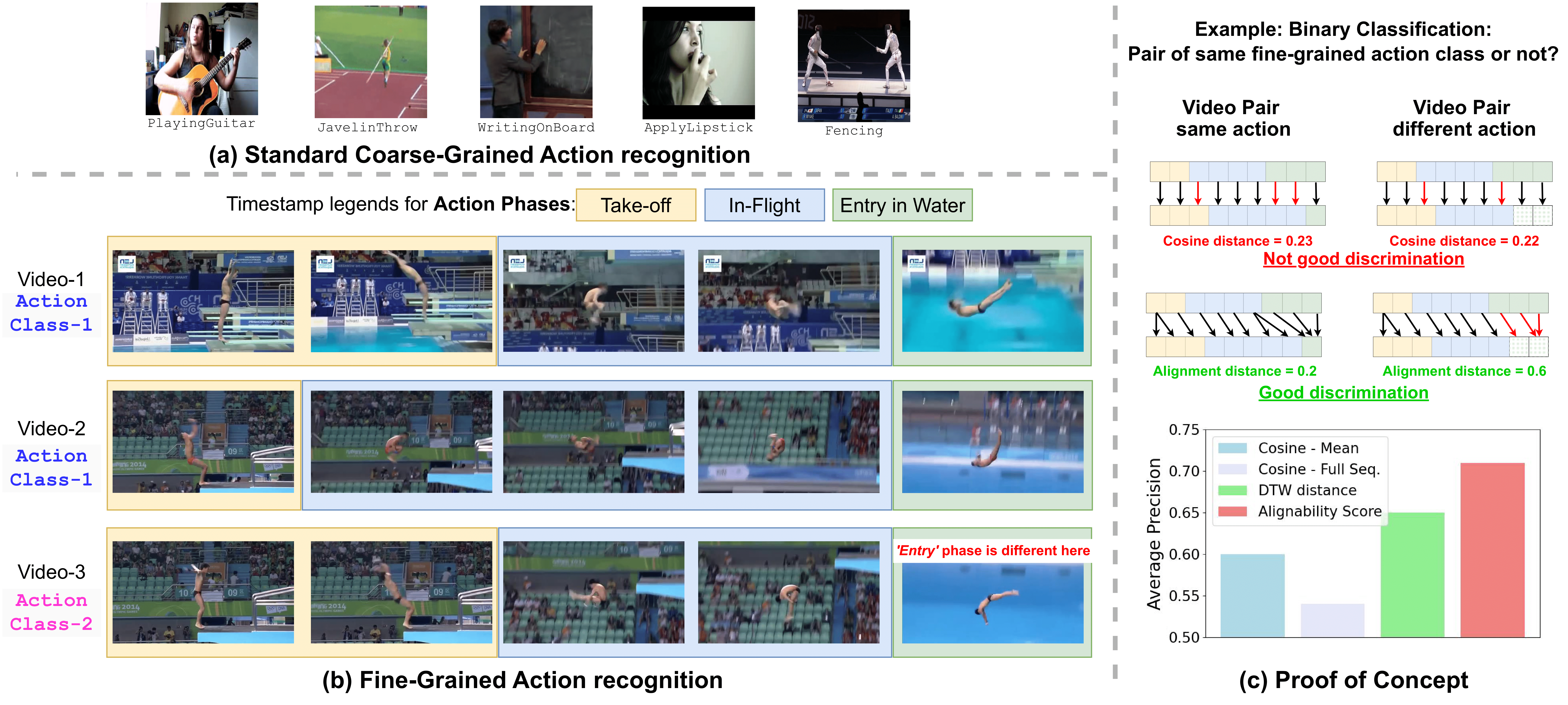
Ishan Rajendrakumar Dave, Fabian Caba, Mubarak Shah, Simon Jenni. The 18th European Conference on Computer Vision (ECCV) , 2024 Oral presentation! (Top 3% of accepted papers) We reframe temporal video alignment as a large-scale retrieval problem: find clips that can be synchronized at corresponding action phases and key events. Our approach reranks semantic retrieval results with the DRAQ alignability score, then aligns the best matches using frame-level representations and dynamic time warping. This supports video editing, processing, and understanding workflows. |
|
FinePseudo: Improving Pseudo-Labelling through Temporal-Alignablity for Semi-Supervised Fine-Grained Action Recognition
Ishan Rajendrakumar Dave, Mamshad Nayeem Rizve, Mubarak Shah. The 18th European Conference on Computer Vision (ECCV) , 2024 We introduce Alignability-Verification-based Metric learning for semi-supervised fine-grained action recognition. Using dynamic time warping (DTW) for action-phase-aware comparison, our learnable alignability score refines pseudo-labels of the video encoder. Our framework, FinePseudo, outperforms prior methods on fine-grained action recognition datasets. Additionally, it demonstrates robustness in handling novel unlabeled classes in open-world setups. |
|
CodaMal: Contrastive Domain Adaptation for Malaria Detection in Low-Cost Microscopes
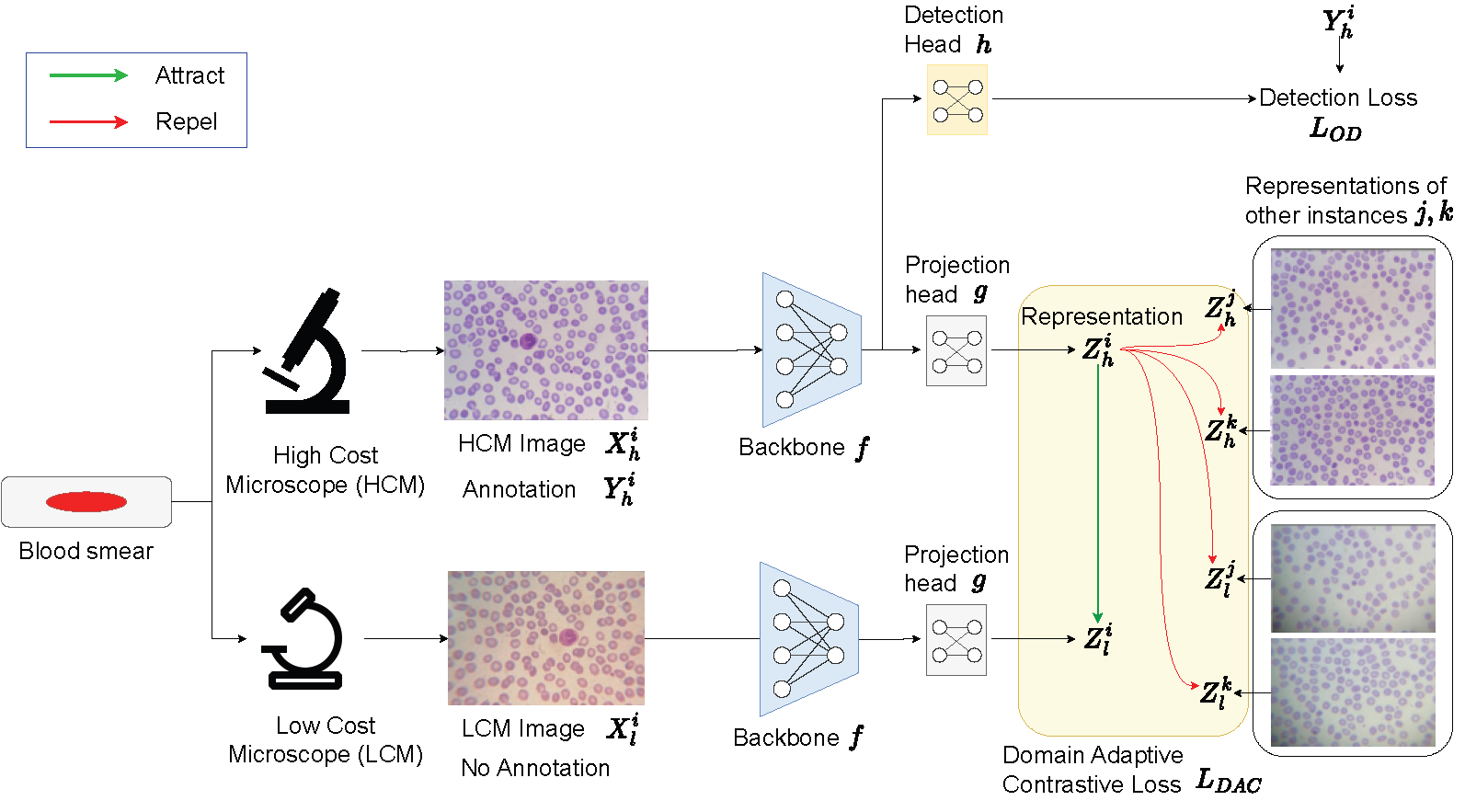
Ishan Rajendrakumar Dave, Tristan de Blegiers, Chen Chen, Mubarak Shah. 31st IEEE International Conference on Image Processing (ICIP) , 2024 Oral presentation! We propose a Domain Adaptive Contrastive objective to bridge the gap between High and Low Cost Microscopes. On the publicly available large-scale M5 dataset, our proposed method shows a significant improvement of 16% over the state-of-the-art methods in terms of the mean average precision metric (mAP), provides a 21× speed-up during inference, and requires only half as many learnable parameters as the prior methods. |
|
No More Shortcuts: Realizing the Potential of Temporal Self-Supervision
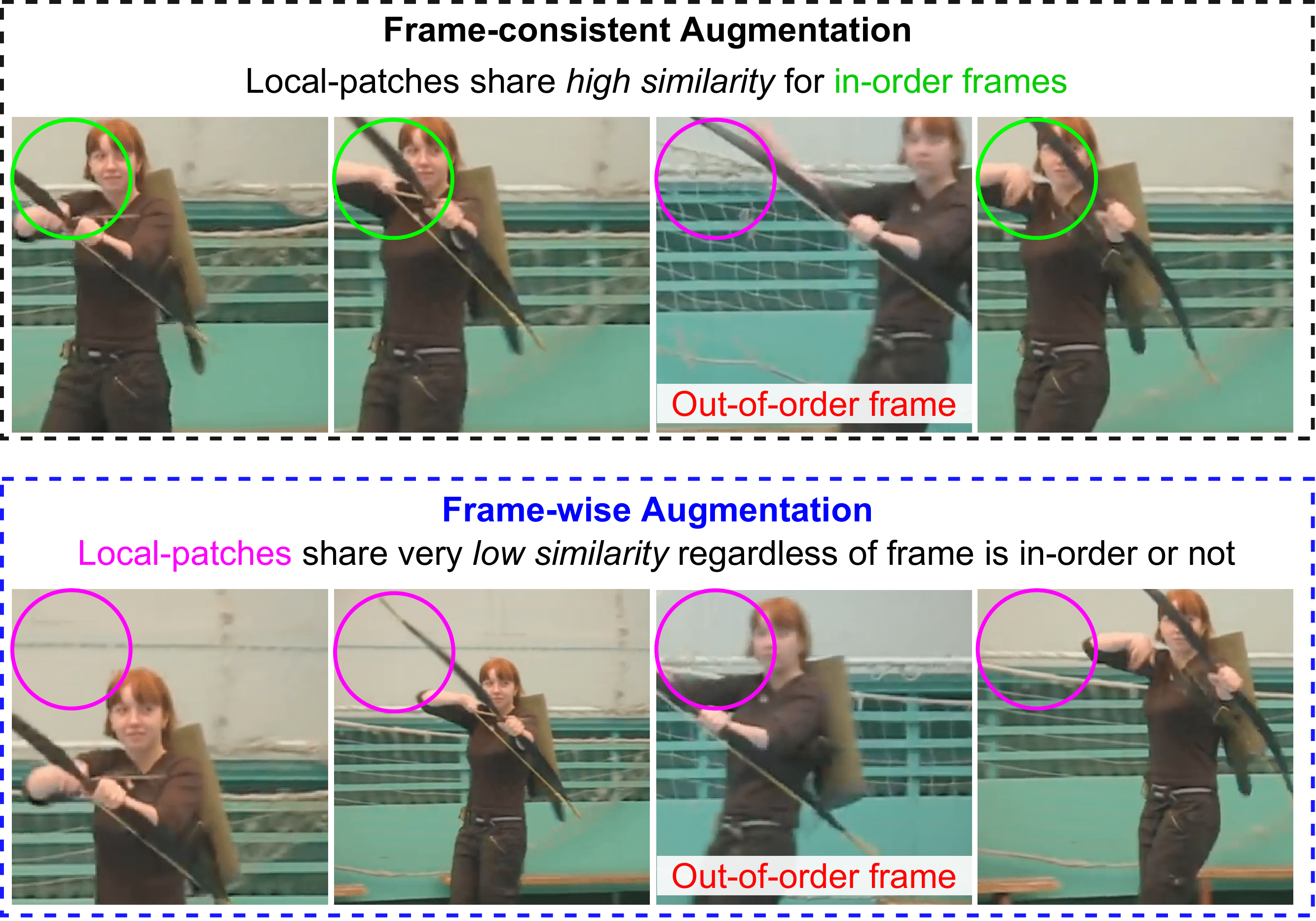
Ishan Rajendrakumar Dave, Simon Jenni, Mubarak Shah. AAAI Conference on Artificial Intelligence, Main Technical Track (AAAI) , 2024 We demonstrate experimentally that our more challenging frame-level task formulations and the removal of shortcuts drastically improve the quality of features learned through temporal self-supervision. Our extensive experiments show state-of-the-art performance across 10 video understanding datasets, illustrating the generalization ability and robustness of our learned video representations. |
|
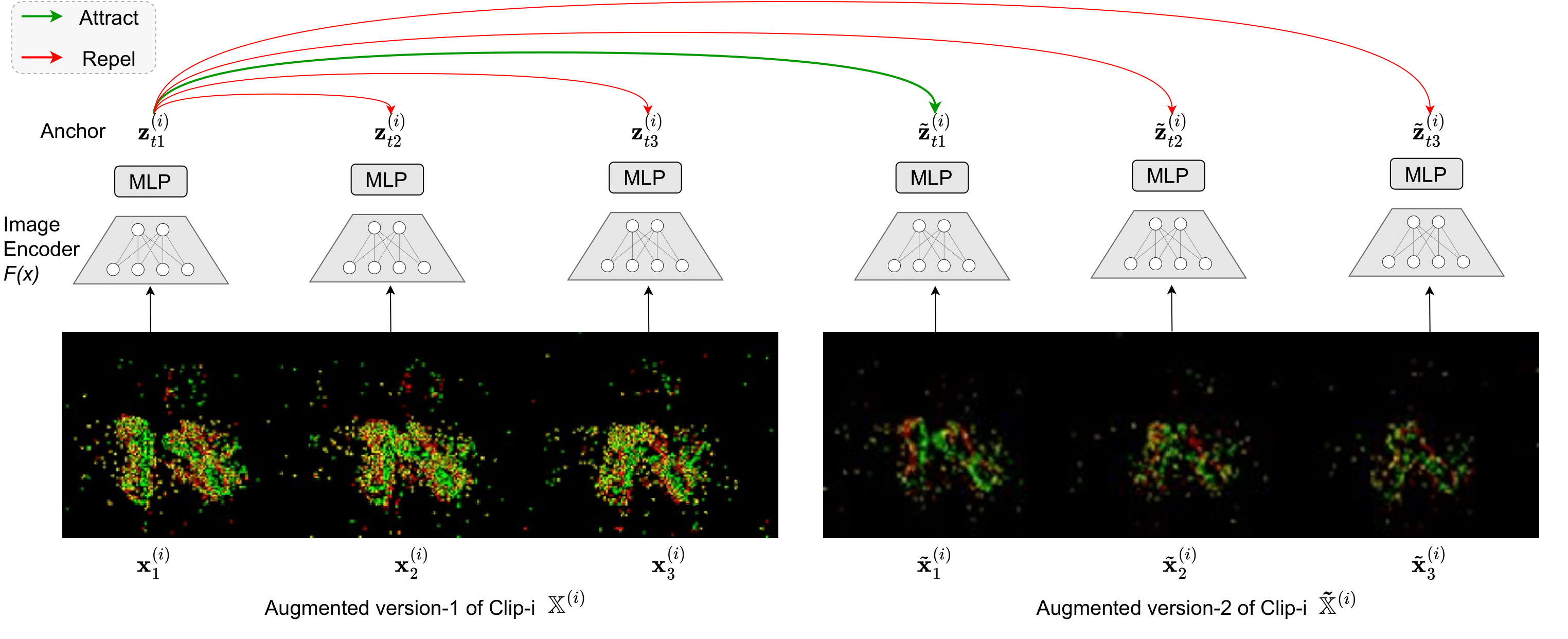
TeD-SPAD: Temporal Distinctiveness for Self-supervised Privacy-preservation for Video Anomaly Detection
Joseph Fioresi, Ishan Rajendrakumar Dave, Mubarak Shah. Proceedings of the IEEE/CVF International Conference on Computer Vision (ICCV), 2023 We propose TeD-SPAD, a privacy-aware video anomaly detection framework that destroys visual private information in a self-supervised manner. In particular, we propose the use of a temporally-distinct triplet loss to promote temporally discriminative features, which complements current weakly-supervised VAD methods. |
|
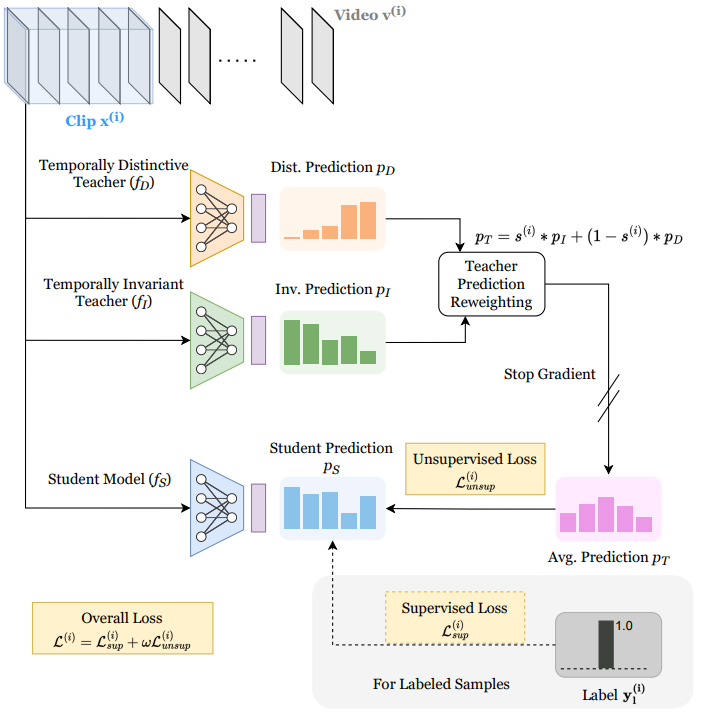
EventTransAct: A Video Transformer-based Framework for Event-camera Based Action Recognition
Tristan de Blegiers*, Ishan Rajendrakumar Dave*, Adeel Yousaf, Mubarak Shah. *= equal contribution IEEE/RSJ International Conference on Intelligent Robots and Systems (IROS), 2023 We propose a video transformer-based framework for event-camera based action recognition, which leverages event-contrastive loss and augmentations to adapt the network to event data. Our method achieved state-of-the-art results on N-EPIC Kitchens dataset and competitive results on the standard DVS Gesture recognition dataset, while requiring less computation time compared to competitive prior approaches. |
|
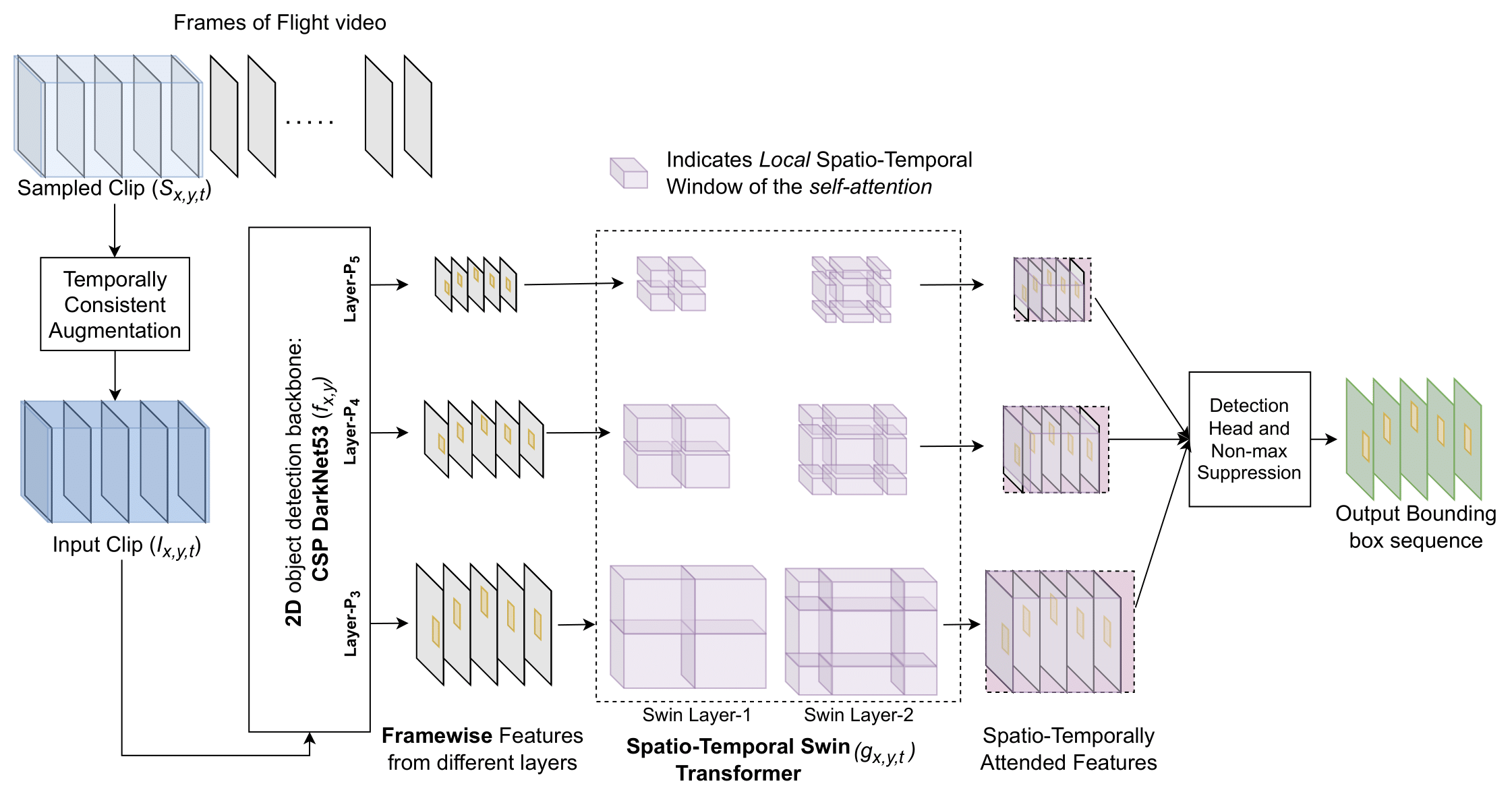
TimeBalance: Temporally-Invariant and Temporally-Distinctive Video Representations for Semi-Supervised Action Recognition
Ishan Rajendrakumar Dave, Mamshad Nayeem Rizve, Chen Chen, Mubarak Shah. Proceedings of the IEEE/CVF Conference on Computer Vision and Pattern Recognition (CVPR), 2023 We propose a student-teacher semi-supervised learning framework, where we distill knowledge from a temporally-invariant and temporally-distinctive teacher. Depending on the nature of the unlabeled video, we dynamically combine the knowledge of these two teachers based on a novel temporal similarity-based reweighting scheme. State-of-the-art results on Kinetics400, UCF101, HMDB51. |
|
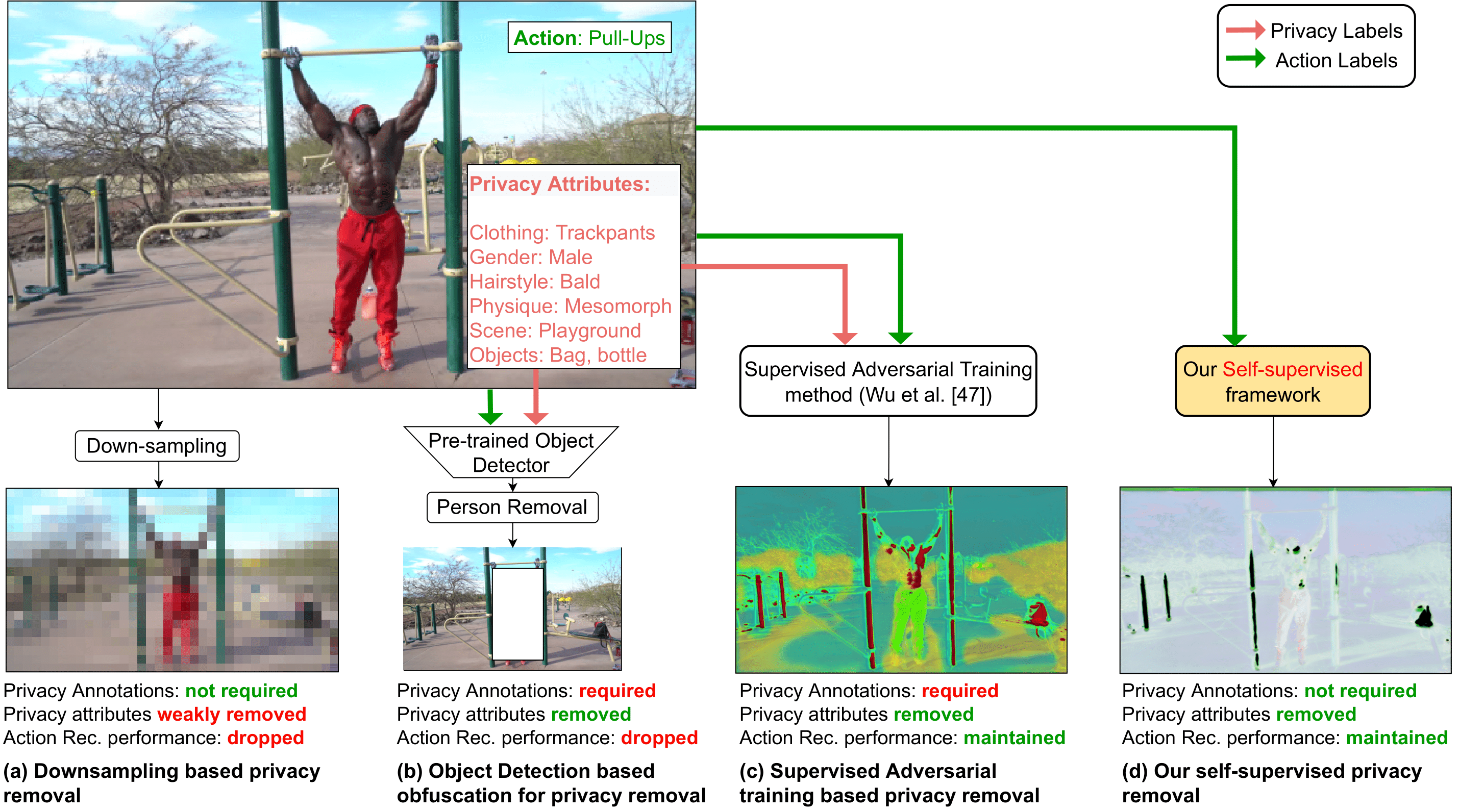
TransVisDrone: Spatio-Temporal Transformer for Vision-Based Drone-to-Drone Detection in Aerial Videos
Tushar Sangam, Ishan Rajendrakumar Dave, Waqas Sultani, Mubarak Shah. 2023 IEEE International Conference on Robotics and Automation (ICRA), 2023 We propose a simple yet effective framework, TransVisDrone, that provides an end-to-end solution with higher computational efficiency. We utilize CSPDarkNet-53 network to learn object-related spatial features and VideoSwin model to improve drone detection in challenging scenarios by learning spatio-temporal dependencies of drone motion. |
|
SPAct: Self-supervised Privacy Preservation for Action Recognition
Ishan Rajendrakumar Dave, Chen Chen, Mubarak Shah. Proceedings of the IEEE/CVF Conference on Computer Vision and Pattern Recognition (CVPR), 2022 For the first time, we present a novel training framework that removes privacy information from input video in a self-supervised manner without requiring privacy labels. We train our framework using a minimax optimization strategy to minimize the action recognition cost function and maximize the privacy cost function through a contrastive self-supervised loss. |
|
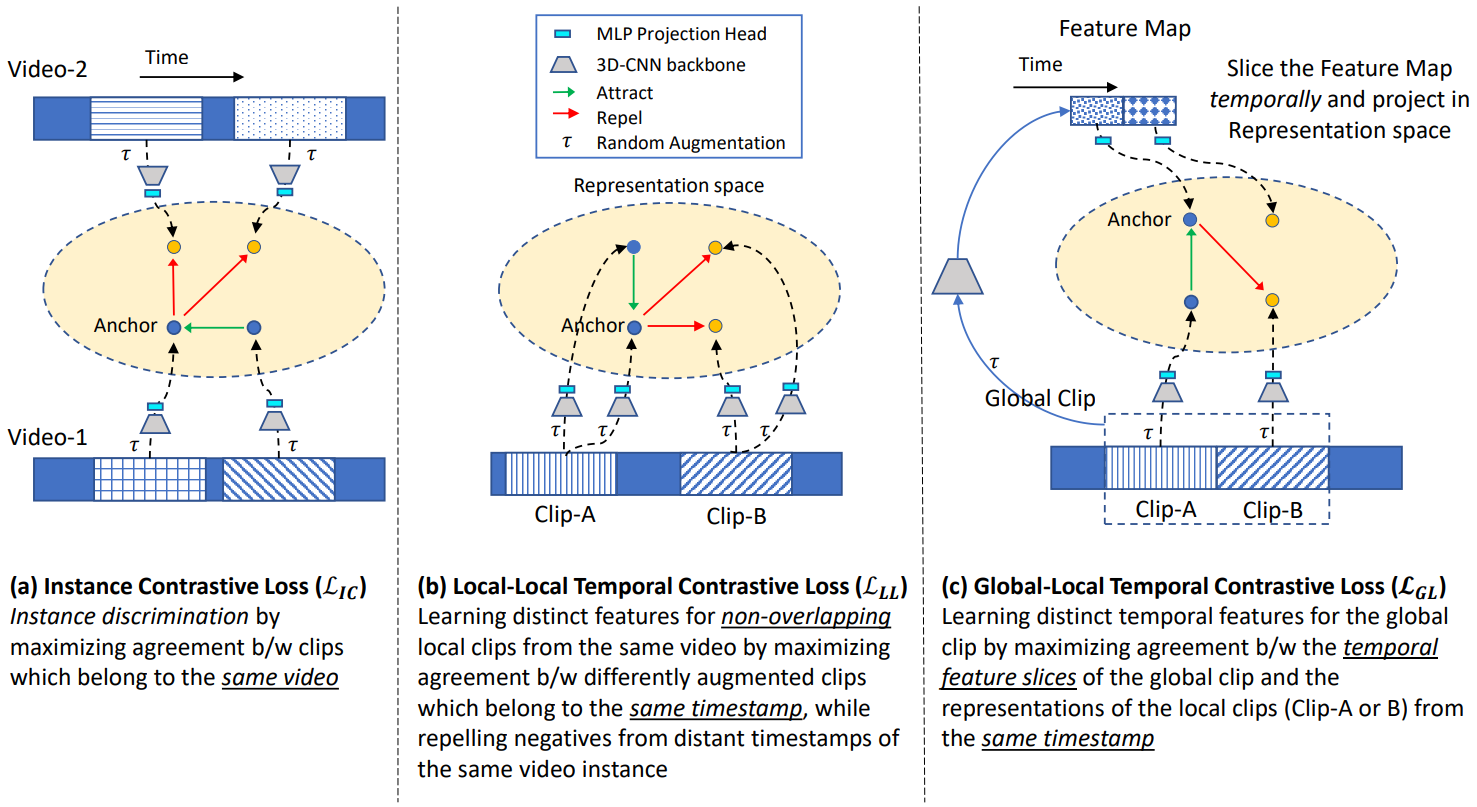
TCLR: Temporal Contrastive Learning for Video Representation
Ishan Dave, Rohit Gupta, Mamshad Nayeem Rizve, Mubarak Shah. Computer Vision and Image Understanding (CVIU), 2022 (280+ citations as of August 2026) We propose a new temporal contrastive learning framework for self-supervised video representation learning, consisting of two novel losses that aim to increase the temporal diversity of learned features. The framework achieves state-of-the-art results on various downstream video understanding tasks, including significant improvement in fine-grained action classification for visually similar classes. |
|
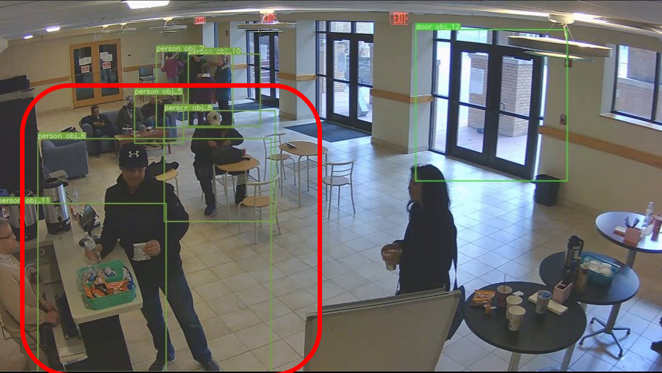
GabriellaV2: Towards Better Generalization in Surveillance Videos for Action Detection
Ishan Dave, Zacchaeus Scheffer, Akash Kumar, Sarah Shiraz, Yogesh Singh Rawat, Mubarak Shah. IEEE/CVF Winter Conference on Applications of Computer Vision (WACV) Workshops, HADCV, 2022 We propose a realtime, online, action detection system which can generalize robustly on any unknown facility surveillance videos. We tackle the challenging nature of action classification problem in various aspects like handling the class-imbalance training using PLM method and learning multi-label action correlations using LSEP loss. In order to improve the computational efficiency of the system, we utilize knowledge distillation. |
|
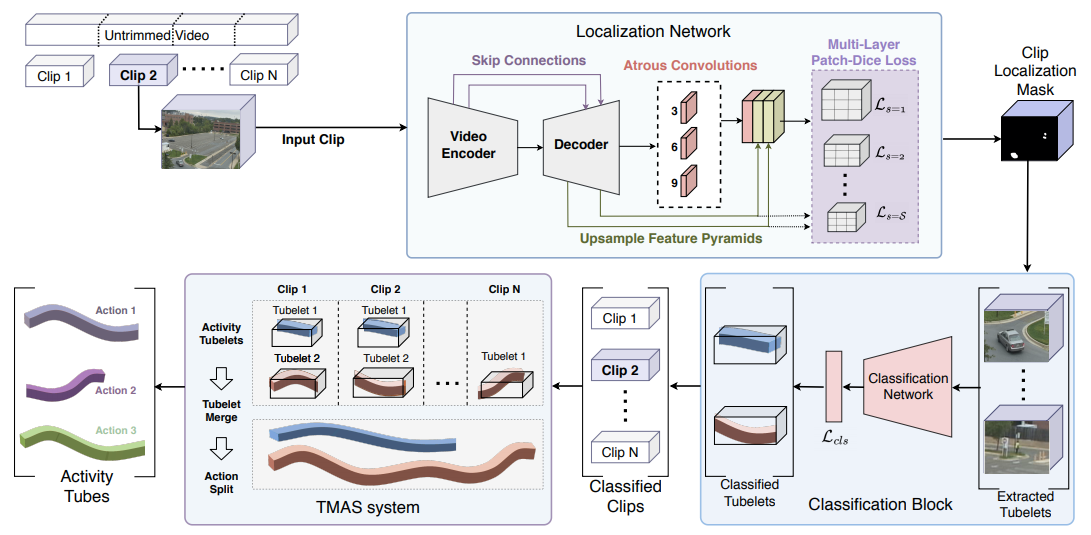
Gabriella: An Online System for Real-Time Activity Detection in Untrimmed Security Videos
Mamshad Nayeem Rizve, Ugur Demir, Praveen Tirupattur, Aayush Jung Rana, Kevin Duarte, Ishan R Dave, Yogesh S Rawat, Mubarak Shah. 25th International Conference on Pattern Recognition (ICPR 2020), held in January 2021 (Best Scientific Paper Award) Gabriella consists of three stages: tubelet extraction, activity classification, and online tubelet merging. Gabriella utilizes a localization network for tubelet extraction, with a novel Patch-Dice loss to handle variations in actor size, and a Tubelet-Merge Action-Split (TMAS) algorithm to detect activities efficiently and robustly. |
Patents
|
|
Identifying and aligning video clips from large-scale video datasets
Simon Jenni, Ishan Rajendrakumar Dave, Fabian Caba US Patent US12536801B2. (Status: Granted), 2026 Granted January 27, 2026 |
|
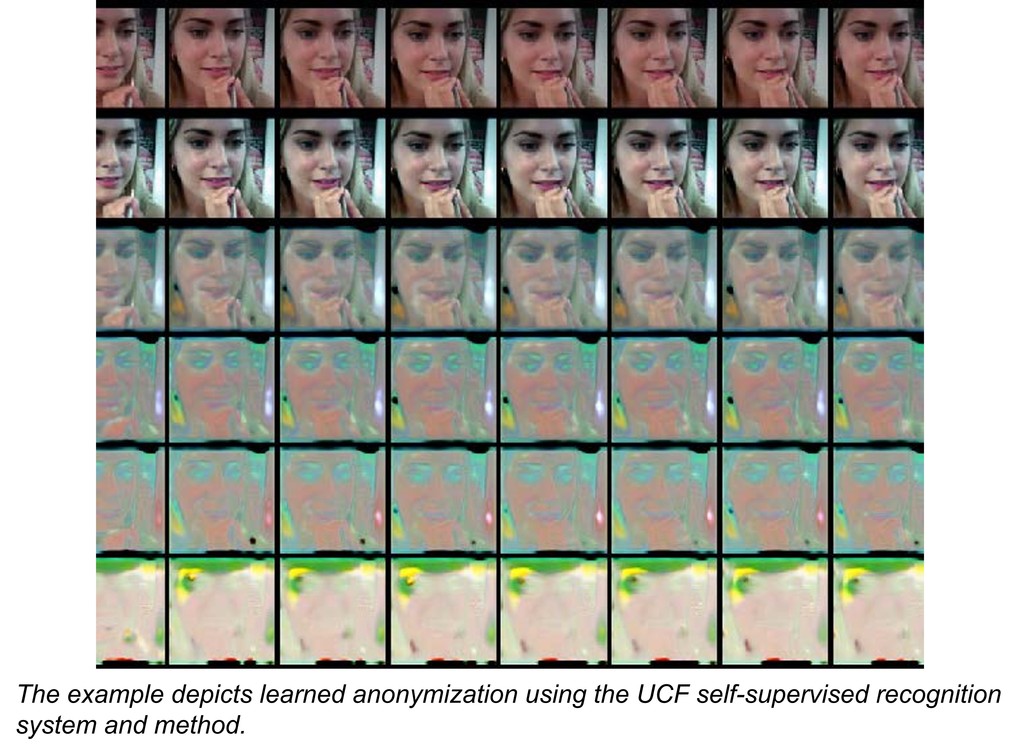
Self-Supervised Privacy Preservation Action Recognition System
Ishan Rajendrakumar Dave, Chen Chen, Mubarak Shah US Patent US12142053B2. (Status: Granted) , 2024 Granted November 12, 2024 |
Recognition
- Outstanding Reviewer, CVPR 2026. Top 5% for review quality among 17,491 reviewers. Program committee
- Selected for the Doctoral Consortium, ECCV 2024.
- Outstanding Reviewer, CVPR 2024. Top 2% for review quality among 10,000 reviewers. Program committee
- Nomination for the Order of Pegasus Award, University of Central Florida, 2024.
- 1st place, Multimodal Action Recognition Challenge, ICIAP 2023.
- 2nd place, ActivityNet ActEV Challenge, CVPR 2022.
- 2nd place, NIST TRECVID ActEV, 2021.
- 1st place and Jury Prize, VI-Priors Action Recognition Challenge, ICCV 2021.
- 1st place, PMiss@0.02tfa, ActivityNet ActEV SDL, CVPR 2021.
- Best Scientific Paper Award, Gabriella, ICPR 2020 (held in January 2021).
- 1st place, VI-Priors Action Recognition Challenge, ECCV 2020.
- 1st place, PMiss and nAUDC, ActivityNet ActEV SDL, CVPR 2020.
- 2nd place, NIST TRECVID ActEV, 2020.
- ORCGS Doctoral Fellowship, 2019 to 2020.
- Top 0.5%, Joint Engineering Entrance Examination, JEE Main, India, 2013.
Professional Service
- Program committee: AAAI 2025 and 2026.
- Technical committee: BMVC Privacy and Fairness Workshop 2024.
- Conference reviewer: CVPR (including 2026), ECCV, ICCV, WACV, ICRA, and IROS.
- Journal reviewer: IEEE TPAMI, Transactions on Image Processing, Transactions on Multimedia, TCSVT, Transactions on Neural Networks and Learning Systems, Robotics and Automation Letters, IEEE Access, Computer Vision and Image Understanding, Pattern Recognition, Expert Systems with Applications, Image and Vision Computing, Journal of Real-Time Image Processing, and Multimedia Tools and Applications.
NSF Research Experiences for Undergraduates
Mentored Kevin Chung (2022), Ethan Thomas (2021), and Kali Carter (2020).